
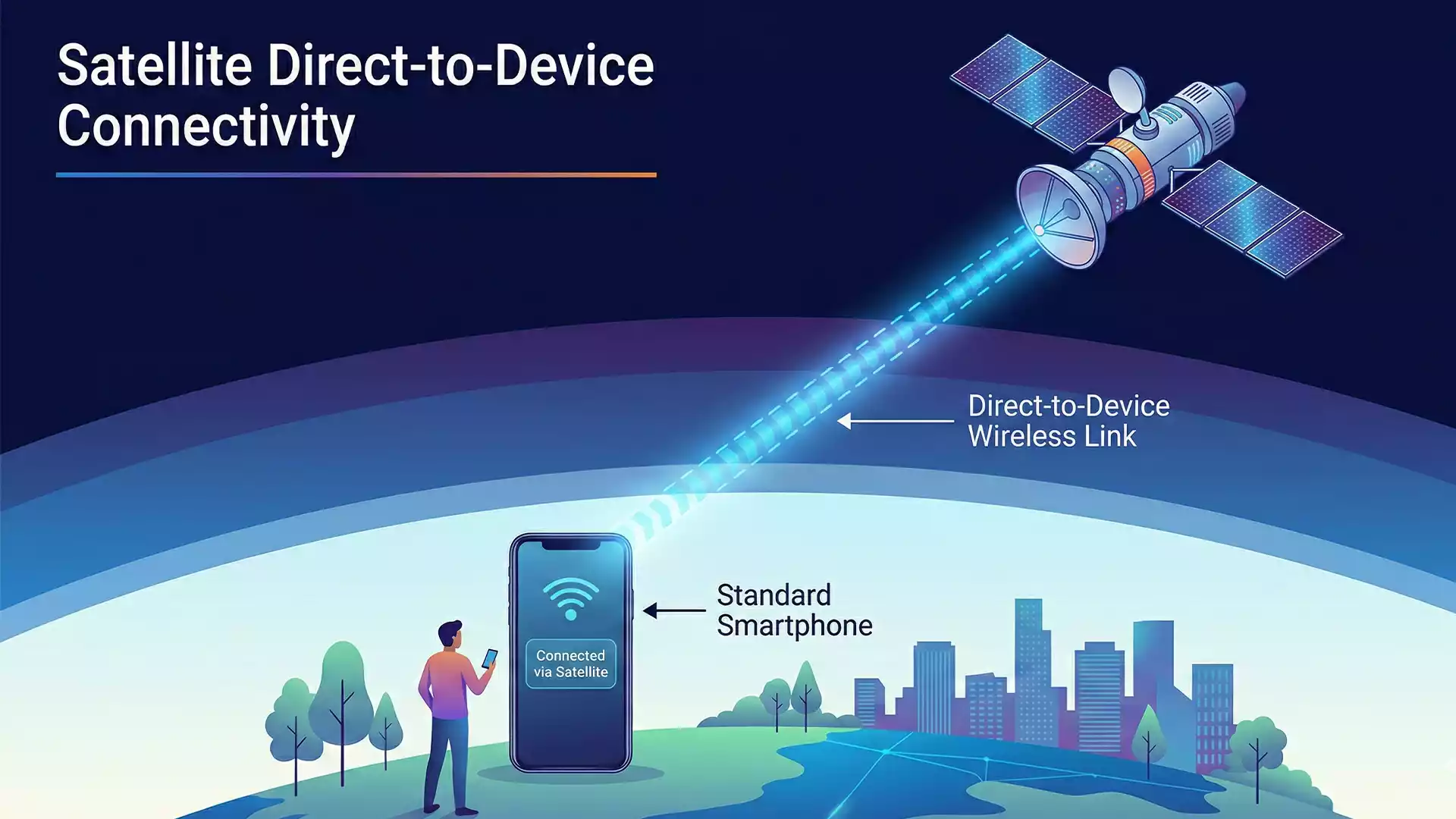
The telecommunications landscape is shifting dramatically in early 2026. Satellite Direct-to-Device connectivity has emerged as a groundbreaking innovation, fundamentally changing how we stay connected. This technology bypasses traditional cell towers entirely. Instead, it links standard mobile phones directly to low-earth orbit satellites. Consequently, users can access services in dead zones where terrestrial signals fail.
Industry leaders are rapidly deploying these systems to eliminate coverage gaps. For instance, SpaceX has accelerated its Starlink Direct to Cell rollout. This capability allows unmodified smartphones to text, call, and browse data globally. Therefore, remote regions, maritime environments, and rural communities finally gain reliable access.
At IT TOUCH, we analyze how such innovations impact enterprise infrastructure. Our telecom consulting services help businesses prepare for this connectivity revolution. Integrating these capabilities ensures your workforce remains operational anywhere.
Understanding Non-Terrestrial Network Technology
The core of Satellite Direct-to-Device connectivity lies in advanced non-terrestrial network technology. Engineers design these satellites to act like “cell towers in space.” They utilize specific spectrum bands that existing phones can detect. Thus, you do not need expensive, bulky satellite phones anymore.
This seamless integration is crucial for mass adoption. 3GPP, the global standards organization, recently standardized these protocols in Release 18. This standardization ensures interoperability across different network providers. As a result, seamless roaming between land-based and space-based networks is now possible.
Bridging Gaps with Global Mobile Coverage Solutions
Reliability defines this new wave of Satellite Direct-to-Device connectivity. Emergency services benefit immensely from this resilience. For example, hikers or disaster victims can send distress signals without local grid infrastructure. AST SpaceMobile is another key player pushing these boundaries. Their massive satellite arrays deliver broadband speeds directly to your pocket.
Businesses must also adapt their logistics and tracking systems. Our connectivity solutions provide the framework to leverage these global mobile coverage solutions. Enhanced tracking visibility transforms supply chain management efficiency.
The Mechanics of Space-Based Cellular Broadband
Technically, Satellite Direct-to-Device connectivity involves complex signal processing. Satellites move rapidly relative to the ground, creating Doppler shifts. Advanced software compensates for these shifts instantly. Additionally, beamforming technology focuses signals directly on specific users.
Regulatory bodies are currently adjusting frameworks to accommodate this. The Nigerian Communications Commission has opened consultations to manage spectrum allocation effectively. This proactive approach highlights the technology’s global significance.
You can learn more about navigating these regulatory changes on our industry insights blog. Staying informed helps you avoid compliance pitfalls.
Future Implications for Tech Infrastructure
The proliferation of Satellite Direct-to-Device connectivity challenges current infrastructure models. Mobile network operators must partner with satellite firms rather than compete. GSMA reports that such partnerships will drive future revenue growth.
We recommend reviewing your current hardware strategy. Visit our about us page to see how we stay ahead of these trends. Furthermore, if you need specific advice, please contact our team for a detailed assessment.
Ultimately, space-based cellular broadband is not just a trend; it is the future of ubiquity.