
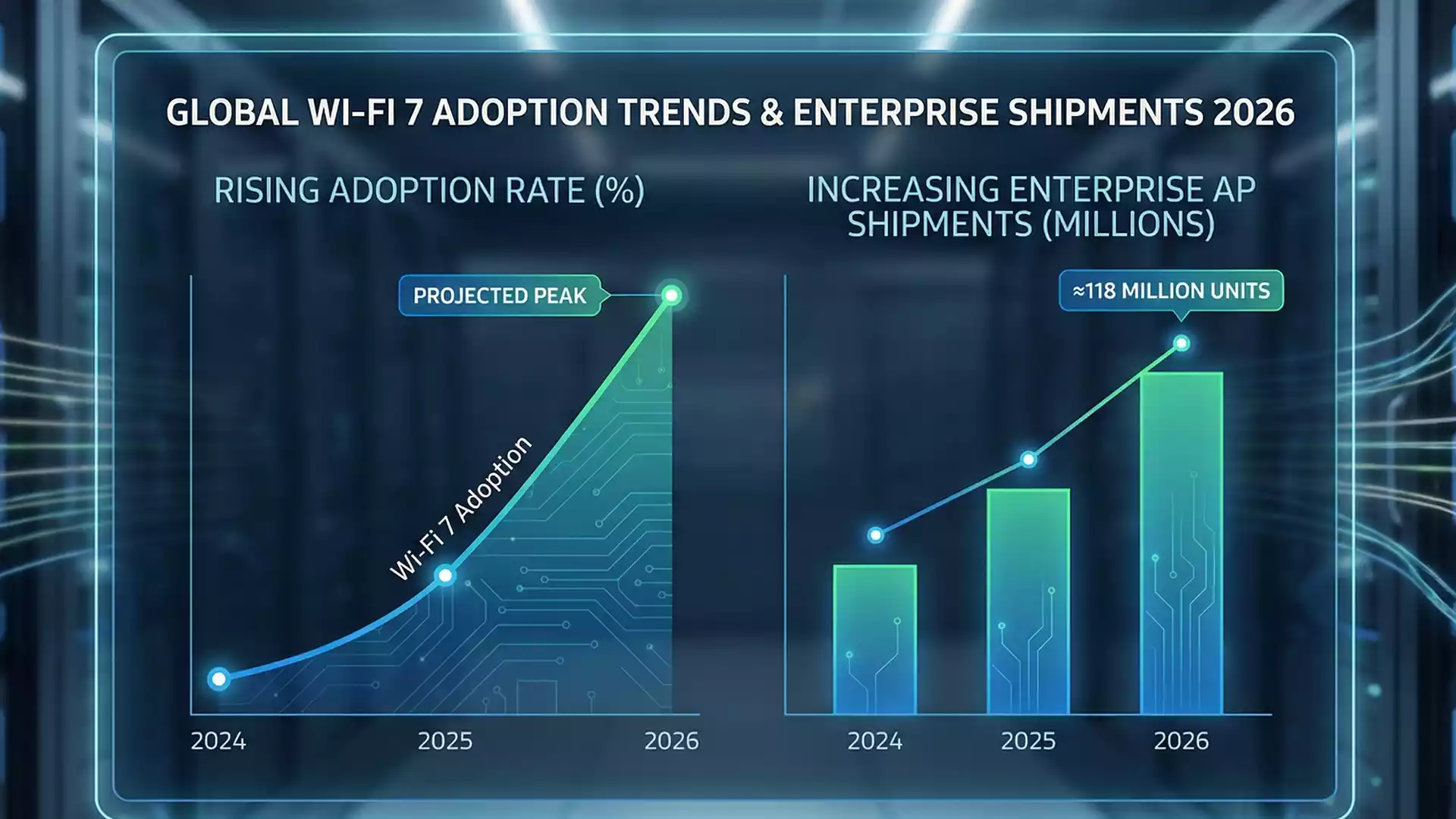
The landscape of wireless technology is shifting dramatically this year. Wi-Fi 7 adoption trends 2026 indicate a massive surge in global uptake. Consequently, businesses are moving away from older standards to embrace this robust connectivity. Experts predict that shipments of Wi-Fi 7 access points will reach nearly 118 million units by the end of 2026. This growth highlights a critical pivot toward reliability over simple raw speed.
Organizations are prioritizing stable connections for their critical operations. Therefore, IT leaders are investing heavily in upgrading their networks. IT TOUCH Limited (https://ittouch.io/) assists these forward-thinking companies in navigating complex infrastructure changes. Furthermore, the focus is now on reducing latency. Low latency is essential for real-time applications like industrial automation and immersive virtual collaboration.
Next-Generation Wireless Connectivity for Enterprises
New hardware is flooding the market. As a result, enterprises have more choices than ever before. Wi-Fi 7 adoption trends 2026 show that the 6GHz spectrum is becoming the new battleground for efficiency. This “clean” spectrum allows for wider channels. Thus, data flows faster and with less interference from neighboring networks.
However, simply buying new routers is not enough. Companies need a comprehensive strategy. Comprehensive planning ensures that new devices integrate seamlessly with legacy systems. Network World reports that educational institutions and large public venues are leading this charge. They require high-density performance that older Wi-Fi 6E standards struggled to maintain under heavy loads.
Moreover, the technology-driven solutions (https://ittouch.io/) provided by experts help mitigate installation risks. Proper configuration is vital. Without it, the benefits of the 320 MHz channel width remain unlocked. Additionally, businesses must consider security. The new standard mandates WPA3 security protocols, ensuring that faster connections do not compromise data safety.
Enterprise Network Infrastructure and Future-Proofing
Reliability is the core promise of the new standard. Wi-Fi 7 adoption trends 2026 suggest that “multi-link operation” (MLO) is a game-changer. MLO allows devices to send data across multiple bands simultaneously. This capability drastically reduces connection drops. For industries relying on uninterrupted data, this is revolutionary.
For instance, healthcare and manufacturing sectors benefit immensely. Wireless Broadband Alliance notes that these sectors are accelerating their hardware refresh cycles. They cannot afford downtime. Consequently, they turn to reliable network partners (https://ittouch.io/) to manage these critical upgrades.
Transitioning to this level of connectivity requires expertise. IDC Research data suggests that adoption rates are outpacing initial 2025 forecasts. This acceleration puts pressure on IT departments. They must act quickly to stay competitive.
6GHz Spectrum Deployment and Beyond
The future looks even faster. While Wi-Fi 7 adoption trends 2026 dominate the headlines, early prototypes for Wi-Fi 8 are already appearing. Nevertheless, the current focus remains on maximizing the utility of Wi-Fi 7.
- Speed: It offers up to 4.8x faster speeds than Wi-Fi 6.
- Capacity: It supports more devices per access point.
- Efficiency: It utilizes the spectrum more intelligently.
To leverage these benefits, businesses need robust tech support services (https://ittouch.io/). Wi-Fi Alliance certifies these devices to ensure interoperability. Therefore, compatibility issues are minimizing.
Finally, the push for better connectivity is global. ABI Research forecasts continued growth in mesh networking equipment. This ensures consistent coverage in sprawling office campuses. By partnering with experienced IT consultants (https://ittouch.io/), your business can seamlessly ride this wave of innovation. The time to upgrade is now.