

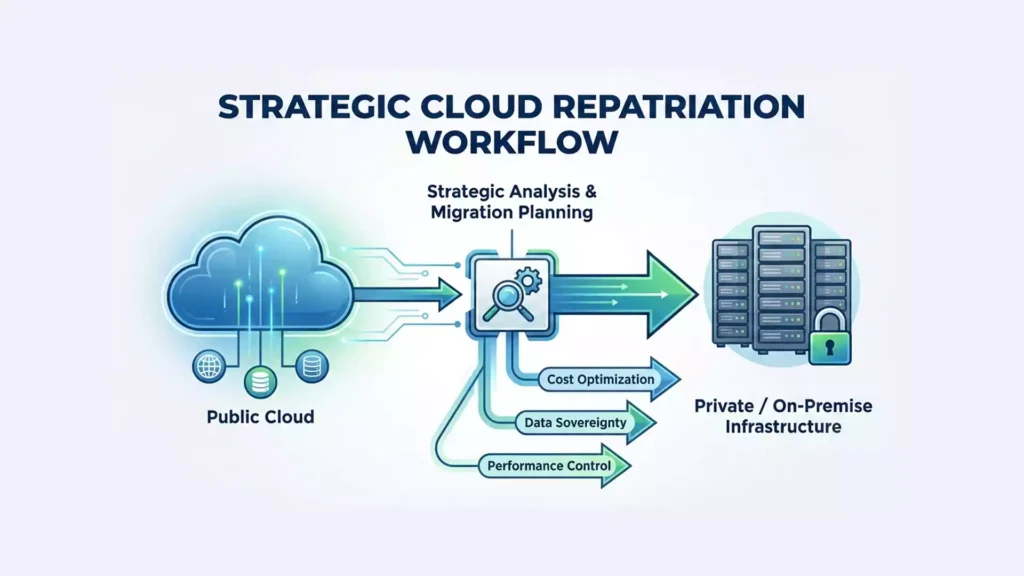
Strategic cloud repatriation is rapidly becoming the defining technology trend of 2026 for forward-thinking enterprises. Organizations currently realize that the public cloud is not always the most cost-effective solution for every workload. Consequently, many tech leaders are moving specific applications back to on-premise data centers or private clouds. This massive shift prioritizes cost control, performance stability, and enhanced security.
Why Business Leaders Choose Private Cloud Infrastructure
Cost reduction drives this major architectural change. Public cloud fees often scale unpredictably, but private cloud infrastructure offers fixed, manageable costs for stable workloads. Furthermore, data gravity concerns are pushing companies to keep sensitive information closer to home. You can gain better oversight by hosting data internally.
Optimizing Hybrid Cloud Costs Effectively
Strategic cloud repatriation does not mean abandoning the public cloud entirely. Instead, it fosters a balanced hybrid approach. You maintain flexibility for bursting workloads while securing core data on dedicated hardware. This balance ensures you only pay for what you truly need. For more insights on balancing these environments, visit our cloud optimization services.
Enhancing Control Through Data Sovereignty Solutions
Regulatory compliance is stricter than ever before. Therefore, strategic cloud repatriation provides the ultimate answer to data residency laws. By storing data locally, you ensure it never crosses borders illegally. This control minimizes legal risks significantly.
- Security: Direct physical access to servers reduces third-party risks.
- Latency: Local processing speeds up critical applications.
- Compliance: You easily meet GDPR and other regional standards.
Learn more about our specific security protocols that align with these needs.
Implementing Your Repatriation Plan
Transitioning requires careful planning. First, identify which applications are costing the most in the public cloud. Next, assess your internal team’s capability to manage hardware. Finally, partner with experts who understand strategic cloud repatriation. Our team at IT Touch can guide this complex process.
You should also consider the hardware lifecycle. Modern servers are more power-efficient, supporting green IT initiatives. Read about sustainable tech on Green IT News.