
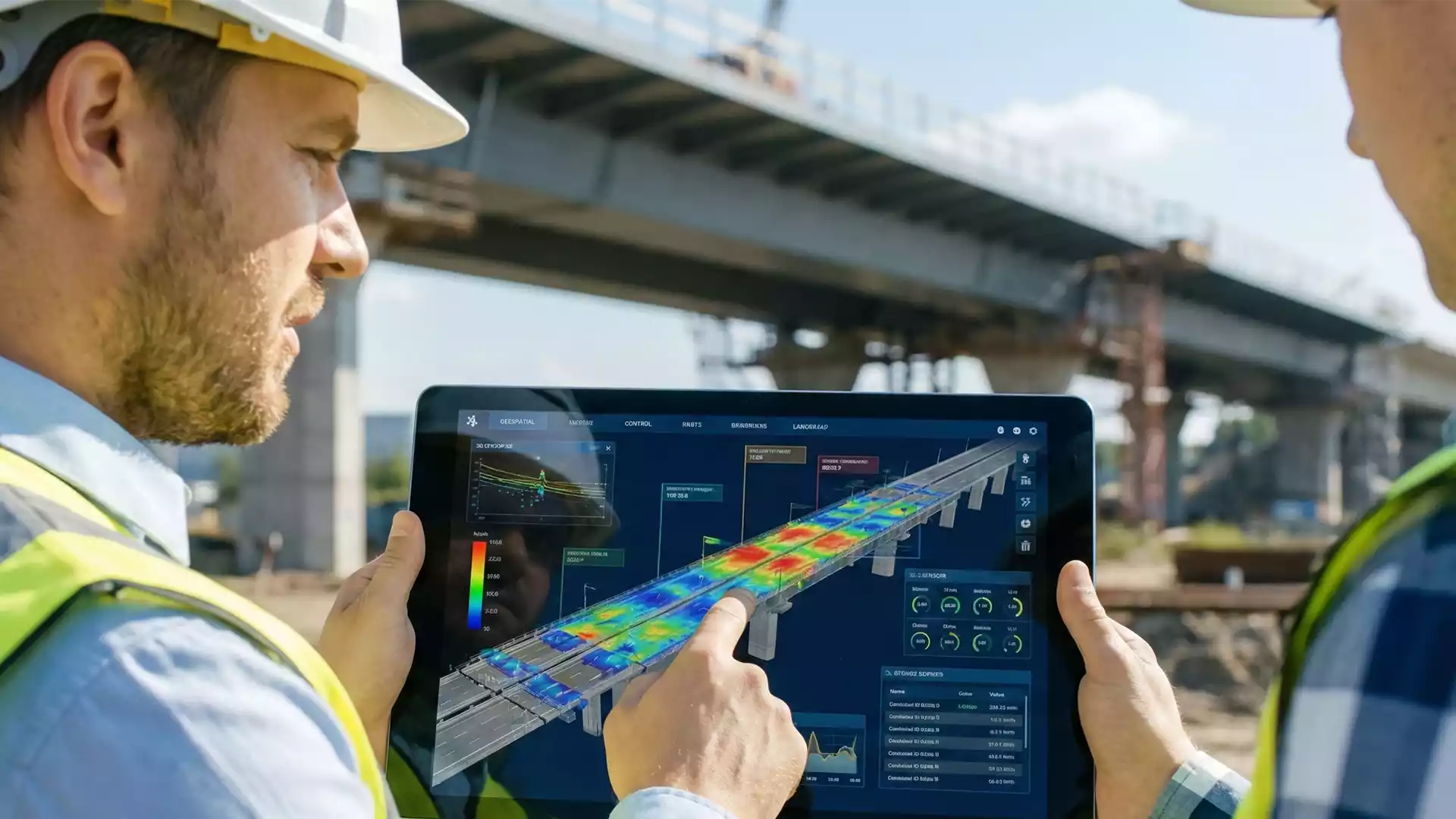
The global landscape for urban planning is changing rapidly this year. Modern developers now prioritize long-term durability over simple aesthetic design. Geospatial digital twins for infrastructure resilience have emerged as the primary tool for achieving these modern goals. Unlike traditional 2D maps, these living replicas integrate real-time sensor data with high-fidelity 3D models.
Enhancing Urban Planning with 3D Reality Capture
The shift toward 3D reality capture allows engineers to visualize potential failures before they happen. By using dynamic GIS asset management, cities can monitor bridge stability and power grid health simultaneously.
This proactive approach reduces maintenance costs significantly. Many organizations now use these tools to simulate flood patterns and extreme weather impacts. Consequently, geospatial digital twins for infrastructure resilience help leaders make data-driven decisions during critical emergencies.
Building Sustainable Cities via Simulation
Sustainability is no longer a secondary concern for modern tech firms. Developers leverage urban infrastructure simulation models to optimize energy consumption across entire districts. These digital replicas allow for the testing of “what-if” scenarios without risking physical assets. This method ensures that new constructions meet strict environmental standards. Using geospatial digital twins for infrastructure resilience ensures that every new project contributes to a greener, safer urban environment.
Future-Proofing with Integrated Spatial Data
Integration is the final piece of the modern geospatial puzzle. When companies combine satellite imagery with ground-level LiDAR, the resulting intelligence is unparalleled. This fusion creates a comprehensive view of the built environment. As we move further into 2026, geospatial digital twins for infrastructure resilience will remain the backbone of global development. They provide the clarity needed to protect our shared future.
Resource Links
Outbound References:
- Learn about OGC standards for 3D data to improve interoperability.
- Explore the Esri Digital Twin overview for enterprise-level GIS solutions.
- Check the latest United Nations GGIM reports on global geospatial trends.
- Read about LiDAR technology advancements in 2026.
- Understand sustainable urban development goals through spatial intelligence.
Internal Resources (ITTouch):
- Discover our custom software development services for geospatial applications.
- Enhance your workflow with our UI/UX design services.
- Explore our expertise in cloud-native pipelines for data processing.
- See how we handle complex data integration for digital replicas.
- Contact us for specialized tech consulting today.